An opinionated idea crucible. Drop in a raw business concept and it stress-tests it like a hostile investment committee — then tells you to pursue, reshape, or kill it.
Generation is the on-ramp. Judgment is the point. Most "AI idea generators" spray plausible-sounding ideas at you; Crucible is built to destroy the weak ones with an evidence-backed VC memo, and only let the strong ones through.

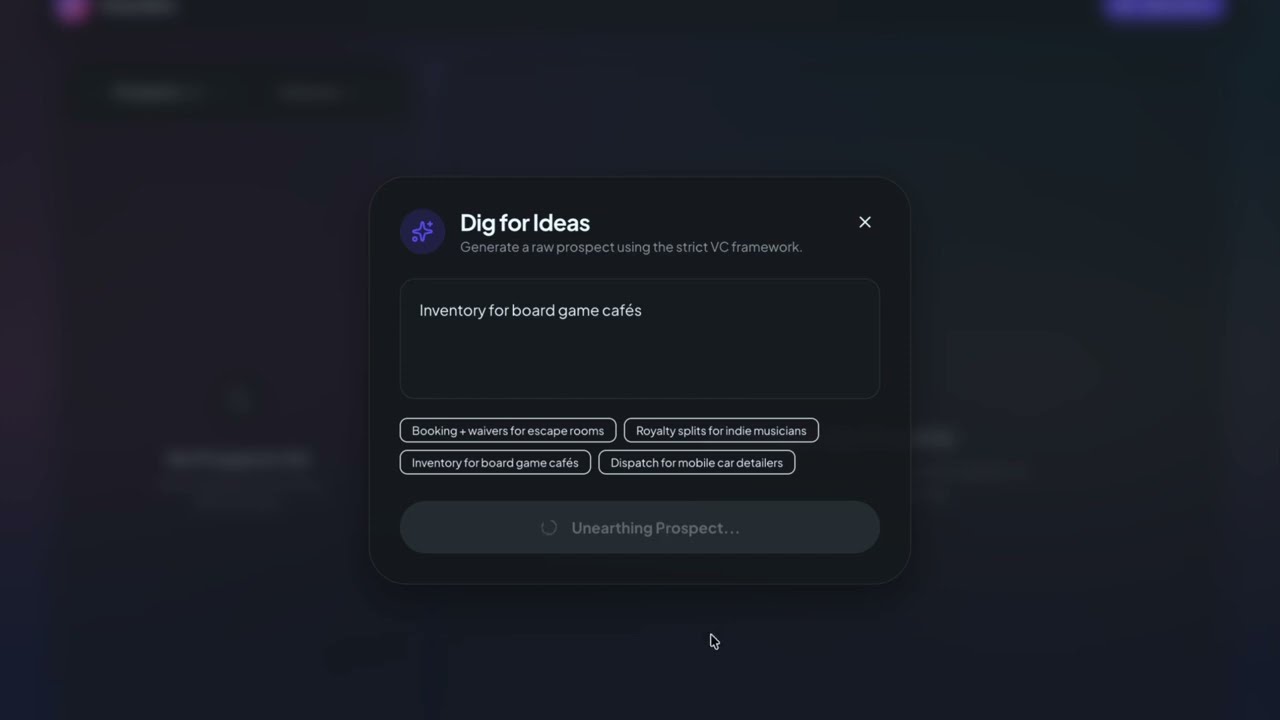
Ideas move through three stages, each driven by an editable AI framework in frameworks/:
- Generate —
frameworks/generator.mdturns a niche into a sharp raw prospect (ICP, wedge, why-now, moat intuition). Anti-convergence rules push it away from the obvious "AI assistant for X." - Validate —
frameworks/validator.mdwrites an investment memo: hard kill tests, three-tier evidence labeling (VERIFIED / INFERRED / ASSUMPTION TO TEST), a structured score, and an honest PURSUE / RESHAPE / KILL verdict. - Spec —
frameworks/spec-builder.mdconverts a validated plan into an agent-ready technical implementation spec for the MVP wedge.
Ideas are plain markdown files under ideas/ (prospects/, validated/, specs/), so your whole pipeline is greppable, diffable, and yours.
git clone https://github.com/robbdimitrov/crucible.git
cd crucible
npm install
cp .env.example .env   # add your GEMINI_API_KEY
npm run dev
Get a Gemini API key at aistudio.google.com/apikey. Then open the app, hit Dig for Ideas, and start putting concepts through the crucible.
The web app is a comfortable shell. The real value is in frameworks/ — three carefully tuned prompts that encode a strict, moat-aware, evidence-disciplined way of evaluating businesses. Tweak them, sharpen them for your domain, and the whole pipeline changes behavior. PRs that improve them are very welcome.
Crucible uses Google's Gemini via @google/genai by default. The model is configurable with GEMINI_MODEL, and the AI calls are isolated in src/routes/+page.server.ts — swapping in another provider is a small, contained change.
Your ideas stay on your machine. ideas/ is gitignored (except the folder markers), so nothing you generate is ever committed by accident.
SvelteKit 2 · Svelte 5 · Tailwind 4 / daisyUI · @google/genai. No backend, no database, no accounts — single-player by design.
npm run dev      # dev server
npm run build    # production build
npm run preview  # preview the build
npm test         # run unit tests (vitest)
npm run lint     # eslint
npm run check # svelte-checkLicensed under the MIT License.